


June 20 – September 20
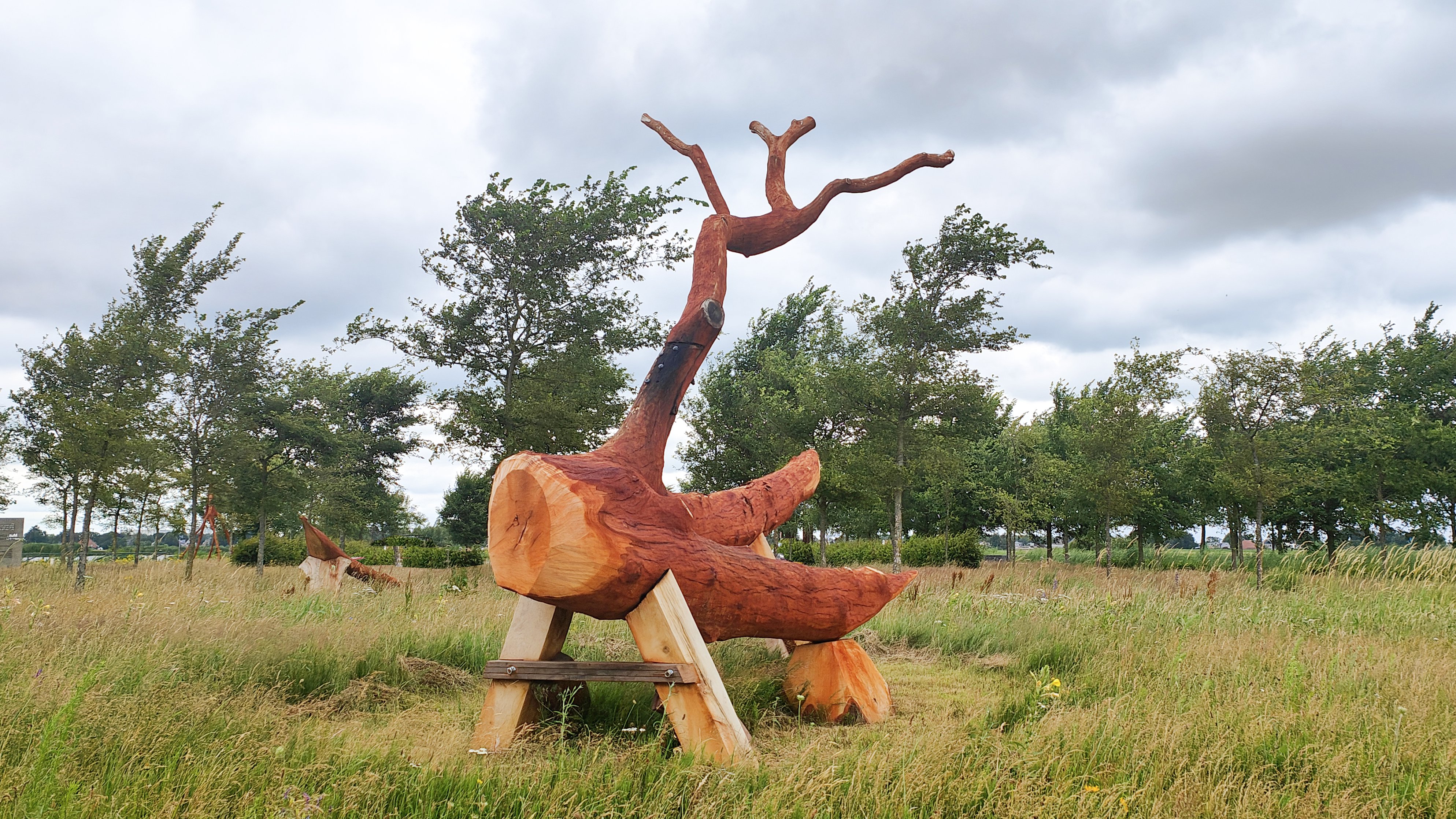
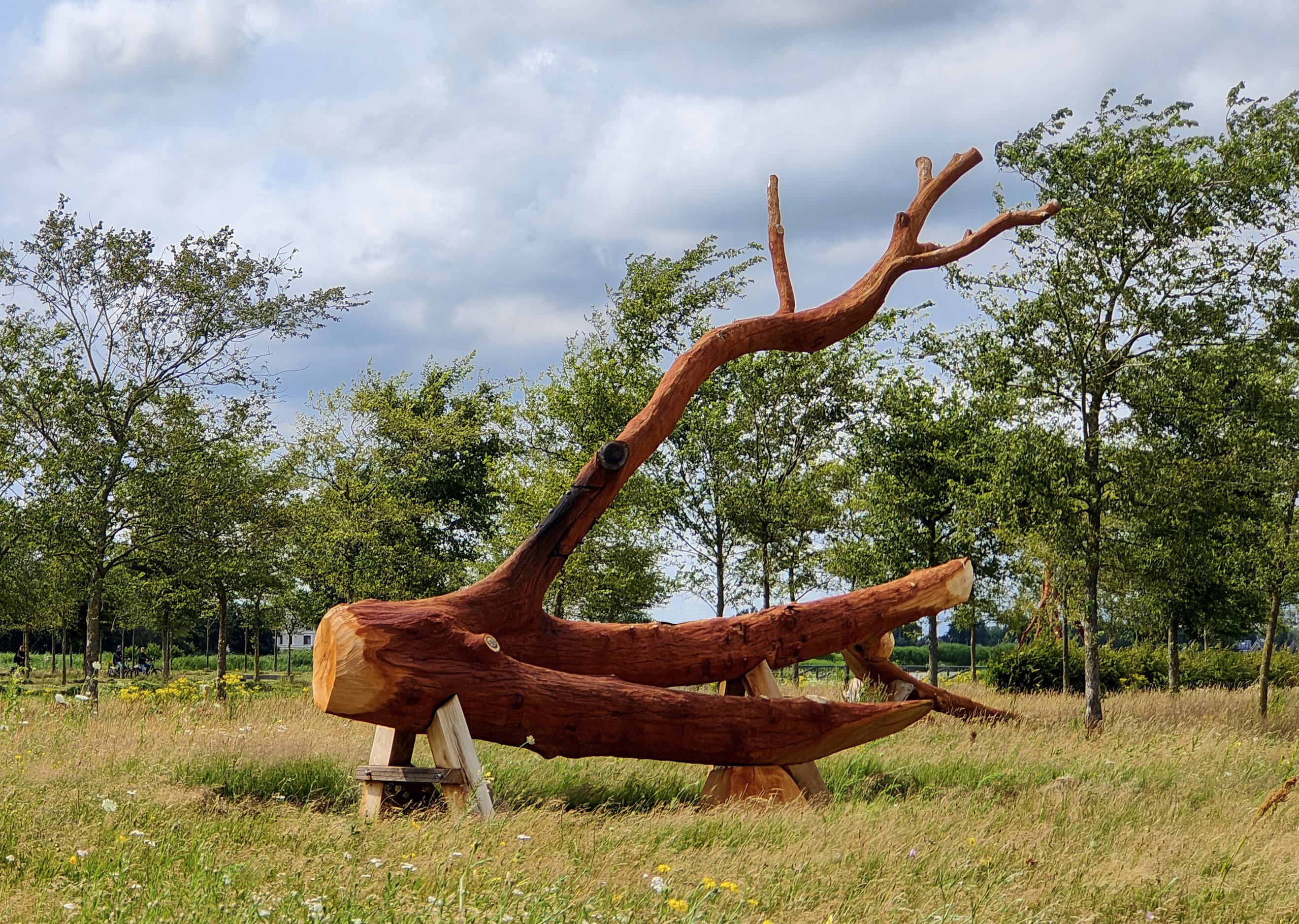
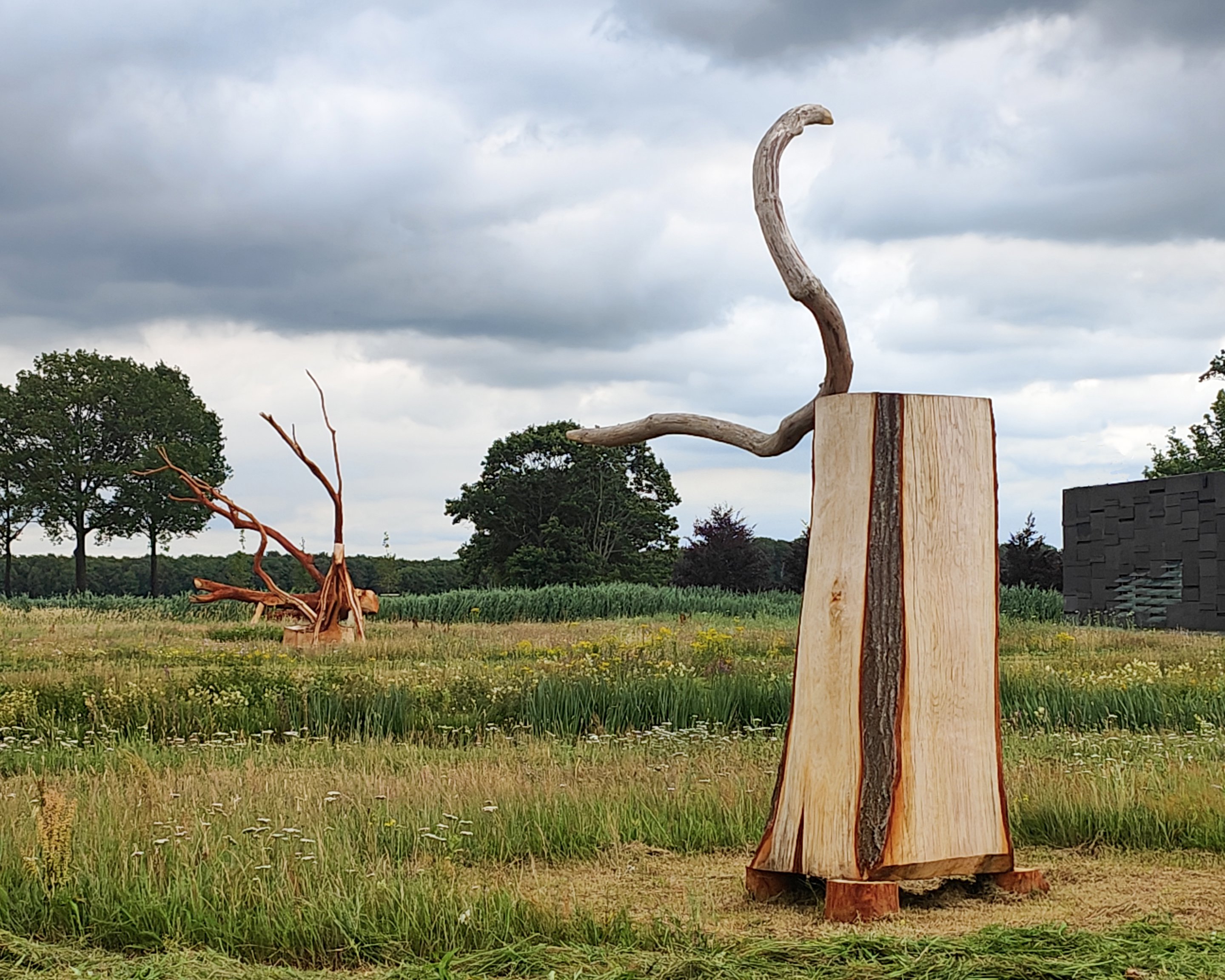
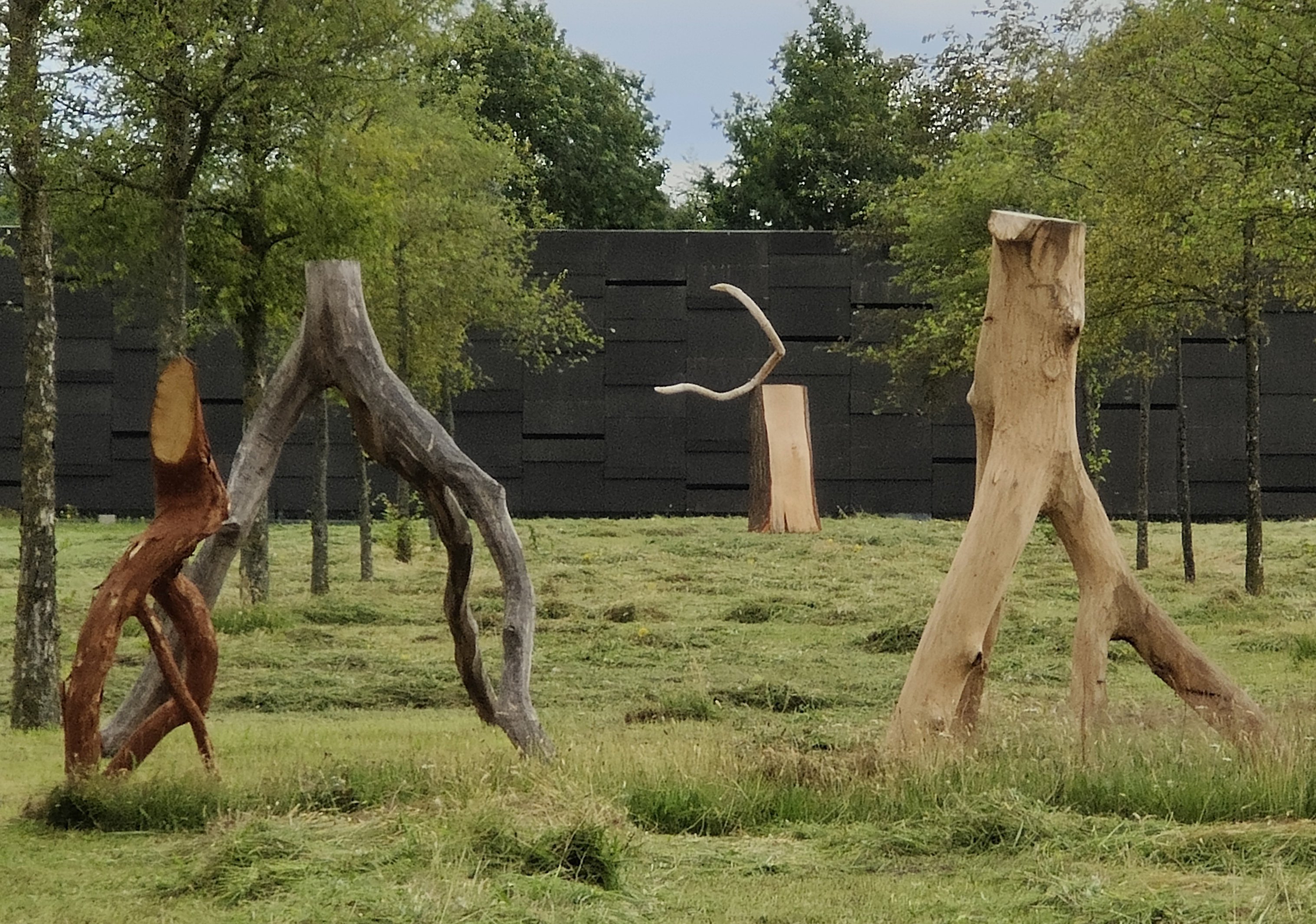
From June 20 to September 20, several sculptures by American sculptor and installation artist Mari Shields (Bangor, ME, USA, 1948) will be on display in the Museum Park and the West Wing of Museum Belvédère. With great respect for nature and craftsmanship, Shields creates public monuments in honor of trees. She works exclusively with trees that have reached the end of their life cycle due to age, disease, or other circumstances.
For this presentation, the sculptures were made from an American red oak, an invasive tree species that is harmful to the native ecosystem. In collaboration with several forest rangers, the tree was felled in Wijnjewoude, in the municipality of Opsterland. The sculptures were specially created for this exhibition and are being presented for the first time.
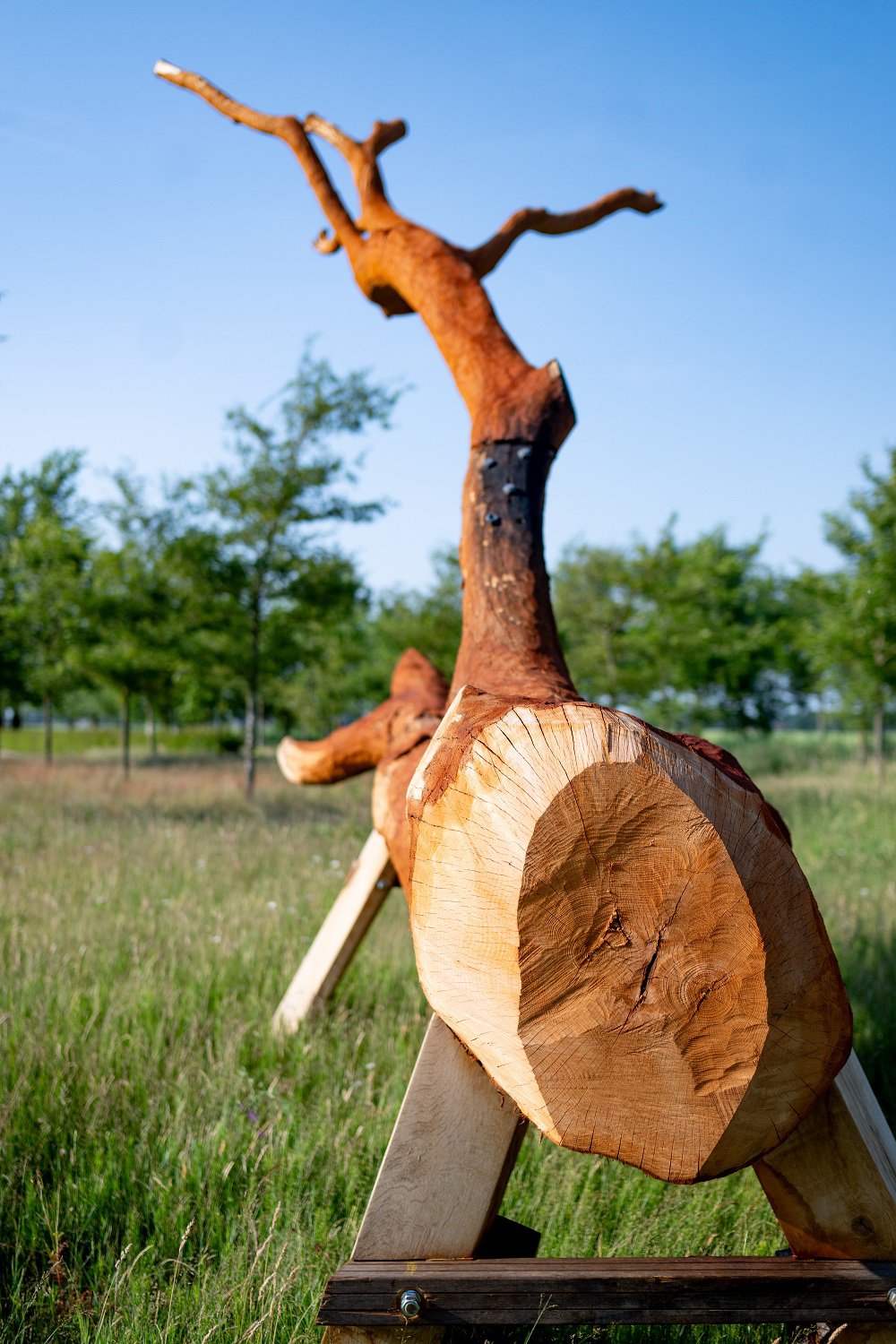
American Red Oak
Shields’ sculptures are entirely dependent on the trees available in the local environment, giving them a strong connection to the site for which they are created. Together with Albert Oost, the curator of Museum Belvédère, the artist explored the area in search of a suitable tree for her project. She focuses primarily on the tree’s crown, with certain species and forms being her preference.
Shields, who settled permanently in the Netherlands in 1972, initially saw Friesland primarily as a province of water, but she soon discovered the many beautiful trees in the scenic, enclosed landscapes of the southeastern part of the province. After some investigation, Staatsbosbeheer made an American red oak (Quercus rubra) available for her project, a tree that was already scheduled to be felled in Wijnjewoude.
This tree species, originally imported to the Netherlands, now grows wild and uncontrolled. It is considered a “forest pest” and is particularly harmful to the native ecosystem.
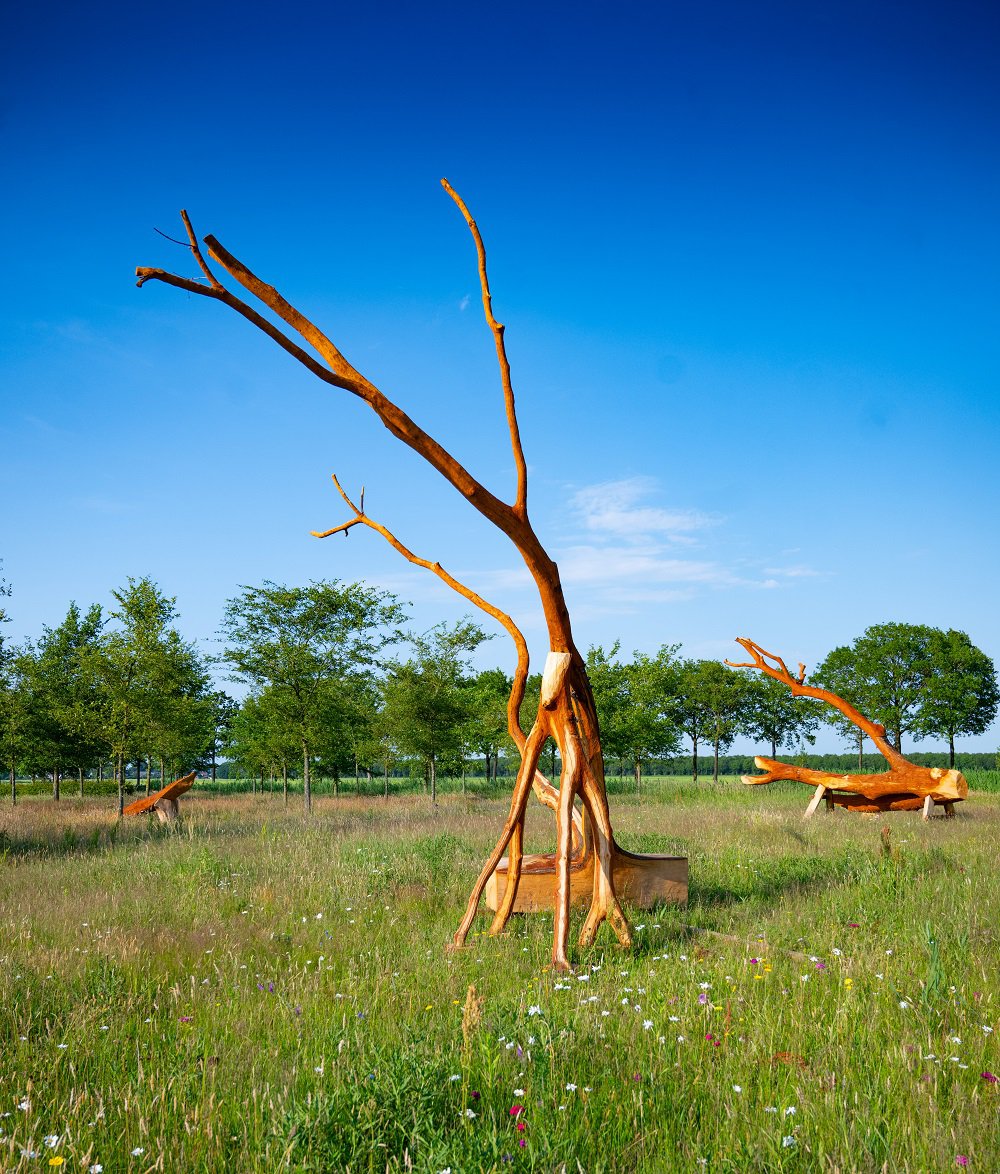
Tribute
After the tree was felled and removed, it had to be transported by truck to Amsterdam, where Shields has her studio. Despite being 77 years old, she still wields the chainsaw with great skill.
"It seems as if she is in love with it. She strokes the tree, in a way. A kind of caress that also expresses respect. At one point, the forest rangers were sawing on site, but when it came to the finer work, she took over. She prefers to do it herself because she ultimately wants to get the best out of the tree." – Albert Oost
The completed work is then transported to its final location, where it is reassembled and installed on site. Mari Shields honors the trees by capturing their specific forms and unique character in her sculptures. In this way, the tree, with her help, tells its story to the visitor.

Oranje Nassaulaan 70
8453 HA Oranjewoud
0513-644999
info@museumbelvedere.nl


